Have you ever stood in an airport terminal, watched the minutes tick away, and felt your blood pressure spike? You are not alone. With the Federal Aviation Administration handling over 44,000 flights and 3 million passengers daily, airports are more crowded than ever. It often feels like trying to squeeze a gallon of water into a pint glass.
So what does this actually mean for your next trip? A study by Upgraded Points analyzed flight data and found that 20.1% of all U.S. flights faced delays, with those delays averaging a painful 73 minutes.¹ Security-related delays also add to the chaos, happening at a rate of 2 per 1,000 flights nationwide and averaging 40 to 50 minutes.
If you are flying through Seattle-Tacoma International, you might face security delays averaging nearly an hour.¹ In places like Orlando or Fort Lauderdale, the story is similar. Although you cannot control air traffic controller shortages, you can control your own habits. Many of the bottlenecks that cost you time are completely self-inflicted. It is time to upgrade your routine and take back your time.
The Pre-Flight Trap of Ignoring Digital Tools
Why are you still standing in line at a kiosk to print a paper boarding pass? Relying on physical documents is a classic mistake. It is the digital equivalent of using a paper map in the age of GPS.
When you skip the airline app, you miss out on real-time updates that save your sanity. Gate changes happen fast, and relying on physical airport screens means you might walk to the wrong end of the terminal. By the time you realize the mistake, you have wasted 15 minutes of precious time.
Instead, download your airline app and a dedicated tracker like Flighty. These tools often send push notifications about gate changes, delays, and inbound aircreate status faster than the airport screens. Having your mobile boarding pass saved to your digital wallet means you can bypass the check-in desk entirely and head straight to security.
Security Checkpoint Blunders
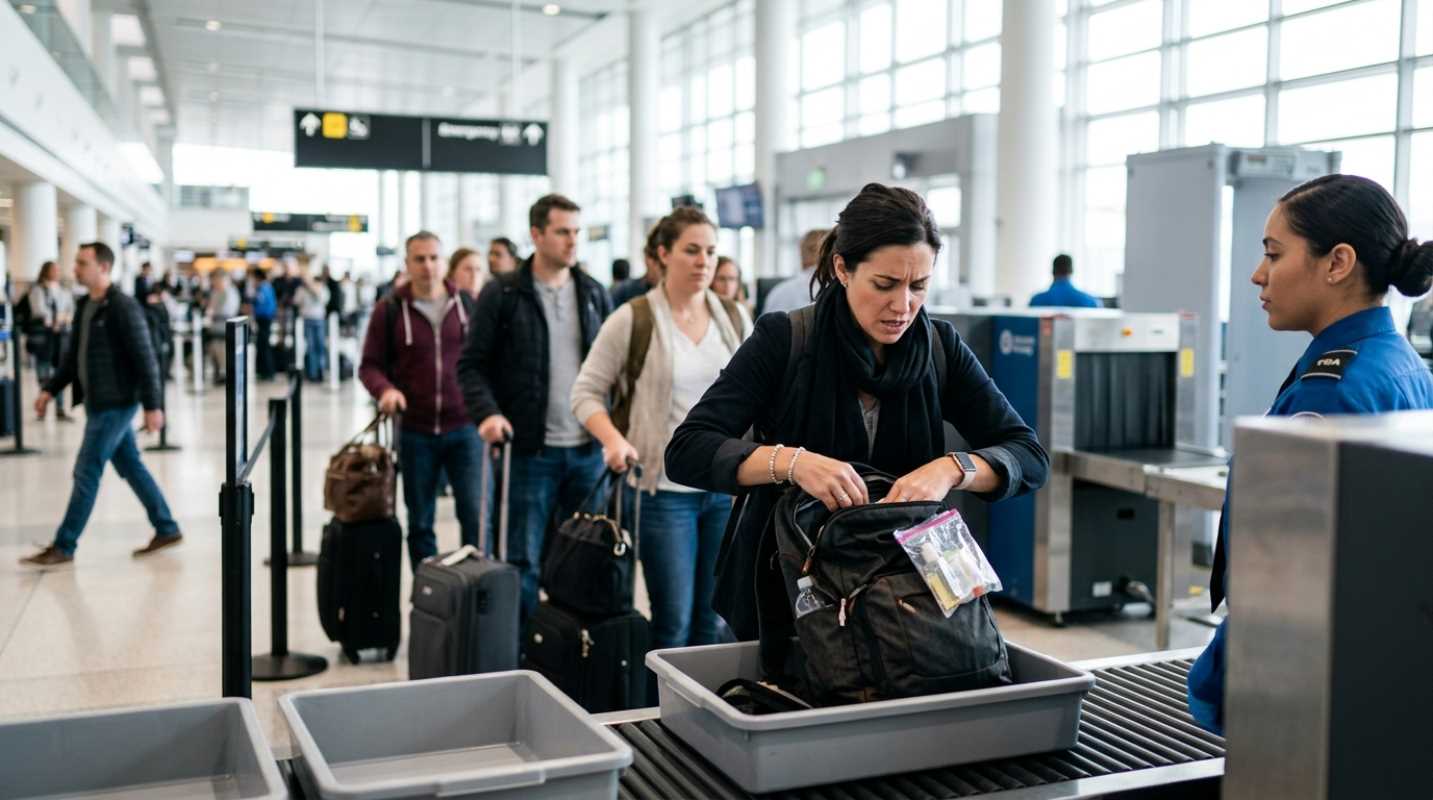
We have all been stuck behind the traveler who acts surprised when they have to take off their shoes. Do not be that person. Security checkpoint blunders are the ultimate time-killers, but you can easily avoid them with a little preparation.
First, stop overpacking your carry-on. When you pack a bag to its absolute limit, the X-ray machines cannot get a clear scan. This triggers a manual bag search, which adds 10 to 15 minutes to your wait.
Second, watch out for modern TSA traps. The agency has ramped up enforcement on specific items that trigger automatic bag pulls
• High-capacity power banks: Any battery exceeding watt-hour limits will get flagged.
• Smart luggage: Bags with non-removable lithium-ion batteries are a major no-go.
• Powders: Items like protein powder or cosmetics over 12 ounces require separate screening.
• Wrapped gifts: TSA officers will rip open wrapping paper to inspect items, destroying your hard work and wasting your time.
You should also dress for speed. Wear slip-on shoes and pants that do not require a belt. Put your watch, keys, and phone inside your carry-on bag before you even join the line. That way, you only have to place your bag on the belt instead of fumbling with loose items. Dropping loose coins or keys directly onto the conveyor belt is a rookie mistake. These items can fall between the rollers, forcing TSA to shut down the machine to retrieve them.
The Luggage Dilemma of Carry-On versus Checked Bags
Should you check a bag or stick to a carry-on? It is a classic travel debate, but the time cost is clear. Waiting at the baggage claim can easily add 30 to 45 minutes to your trip.
But trying to force a massive suitcase into the overhead bin is not the answer either. If your bag is too large, gate agents will force you to gate-check it. This means you still have to wait for it at your destination, defeating the entire purpose of bringing a carry-on.
To avoid this, invest in a bag that fits standard airline dimensions. Pack strategically by placing your liquids and laptop at the very top of your bag. If you end up in a standard security lane, you can whip them out instantly without digging through your clothes. If you must check a bag, check the live website of your airport before you leave. Many major hubs post live wait times for bag drop and security, helping you plan your arrival.²
Strategic Navigation to Avoid Terminal Bottlenecks
Getting through security is only half the battle. Once you are in the terminal, poor navigation can still cause you to miss your flight.
Have you ever looked at a terminal map before arriving at the airport? Most people do not. Knowing your gate location relative to security matters to avoiding a last-minute rush. If you have a tight connection, booking a layover of less than an hour is a massive risk. With ongoing air traffic controller shortages, even a minor delay can cause you to miss your next flight.³
When disruptions do happen, your attitude matters. Remaining pleasant and polite is the fastest way to get a problem resolved. Gate agents are far more likely to help a polite traveler than someone who is shouting.
Top Recommendations for Faster Airport Travel
If you want to move through the airport like a seasoned professional, you need the right tools. Trusted traveler programs are the single best investment you can make to buy back your time.
• TSA PreCheck: For a small fee, PreCheck allows you to keep your shoes, belts, and light jackets on. You also get to leave your laptop and liquids in your bag. The TSA reports that 90% of PreCheck passengers wait less than 5 minutes.
• Global Entry: This program includes TSA PreCheck and is perfect for international travelers. The application fee is $120, but minors under 18 are free if their parent or guardian is already a member.
• CLEAR Plus: This service uses biometric scans to bypass the standard ID check, taking you straight to the front of the physical screening line.
Mastering Airport Travel Tips for a Seamless Trip
Taking control of your airport routine is all about preparation and mindset. By using digital tools, packing smart, and investing in expedited screening programs, you can eliminate the stress of modern air travel.
Air travel in 2026 demands a smarter approach. Stop relying on outdated habits and start planning your next departure with efficiency in mind. With these simple adjustments, you will spend less time waiting in lines and more time enjoying your destination.
Sources:
1. Upgraded Points
https://upgradedpoints.com/news/airports-most-security-delays/
2. Afar
https://www.afar.com/magazine/how-to-find-out-what-tsa-wait-times-are-at-the-airport
3. Squaremouth
https://www.squaremouth.com/travel-advice/airport-travel-delays