Ask people what a portion of pasta looks like and you will get answers ranging from a modest cup to a heaped platter, with most landing far above what any nutrition label considers a serving. This is not a failure of common sense. Portions in restaurants, packages, and even home kitchens have expanded steadily for decades, quietly recalibrating what looks normal. A reality check on portion sizes is not about shrinking your meals into sadness; it is about restoring an accurate sense of how much food you are actually eating, so your choices become choices again.
How Normal Got So Big
Portion growth happened slowly enough that nobody noticed. Bagels, muffins, burgers, fries, and fountain drinks are all dramatically larger than the versions sold a couple of generations ago, with some restaurant items now two to five times their original size. Dinner plates themselves grew, and a portion that fills a modern plate would overflow an older one. Because the environment resets our reference point, people reliably judge the portion in front of them as normal, whatever its size.
Researchers call the tendency to finish what we are served the completion effect: most people eat by visual units, one plate, one bag, one bottle, rather than by internal fullness. Serve more, and people eat more, usually without rating themselves as any more satisfied afterward. That is the core problem portions create, and also the lever that fixes it.
Serving Size Versus Portion Size
A quick vocabulary distinction clears up a lot of label confusion. A serving size is the standardized amount printed on a nutrition label, used so products can be compared. A portion is what actually lands on your plate. The two often have little to do with each other. A bottle of juice may contain two servings; a restaurant pasta may hold three or four label servings of pasta before counting the sauce.
Labels have improved, with many now reflecting amounts people realistically consume, but the mismatch persists. The practical habit is simple: when reading a label, check the serving size first and honestly compare it to what you will actually eat. A snack that looks reasonable per serving can double or triple once real-world portions are applied. No judgment is required, only accurate accounting.
Your Hand Is a Portable Measuring Kit
Weighing food is accurate and tedious; hand-based estimates are slightly rough and always available. Because hand size loosely scales with body size, the system self-adjusts. The common version works like this:
- A palm, fingers excluded, approximates a portion of cooked meat, fish, or poultry.
- A cupped hand approximates a portion of cooked rice, pasta, cereal, or potatoes.
- A fist approximates a portion of vegetables or a piece of whole fruit, and vegetables are the category to be generous with.
- A thumb approximates a portion of fats such as butter, oil, nut butter, or cheese.
- Two cupped hands approximate a portion of leafy salad or popcorn-style light foods.
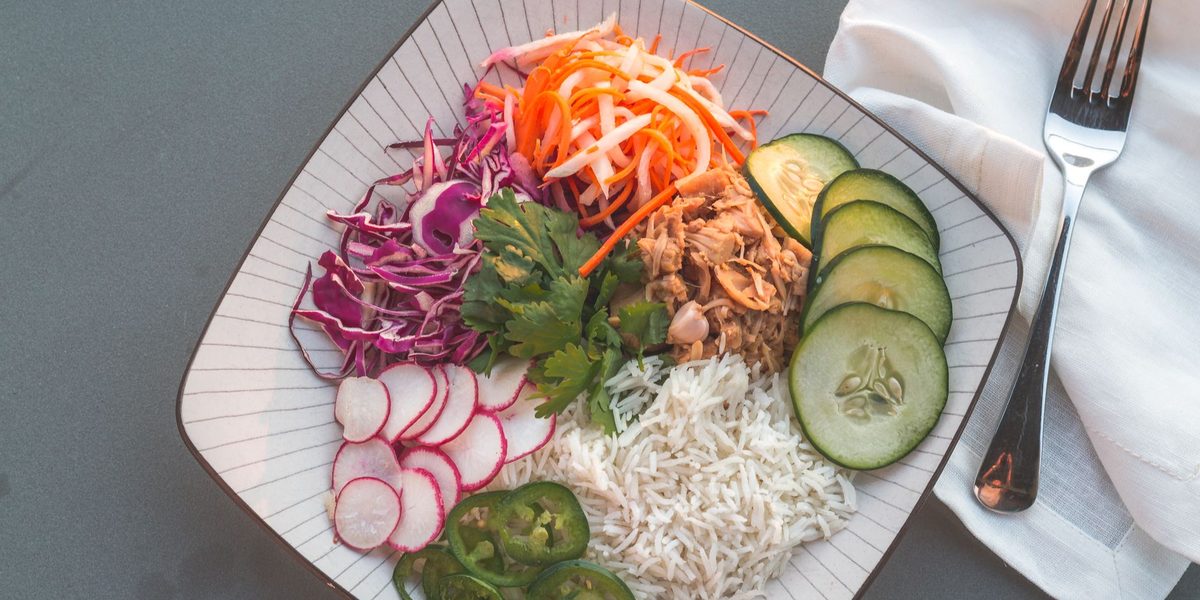
A balanced meal sketches itself from these units: a palm of protein, a cupped hand or so of starch, a fist or two of vegetables, a thumb of fat. Nothing to download, nothing to weigh, and close enough for everyday purposes.
The Plate and Bowl Trick
Since people eat in visual units, the fastest portion intervention is changing the container. The same amount of food looks meager on a large plate and generous on a smaller one, and the smaller-looking meal genuinely satisfies, because satisfaction tracks perception more than grams. Using a medium plate for dinner, proper bowls rather than mixing-bowl-sized vessels for pasta and cereal, and tall narrow glasses for caloric drinks nudges portions down without a single act of willpower.
Serving style matters too. Plating at the counter and leaving the pots on the stove inserts a pause before second helpings, while platters parked on the table invite continuous topping up. The exception is vegetables and salad: leave those within arm's reach, because effortless refills are exactly what you want for that category. None of this is deprivation; it is simply pointing a well-documented quirk of perception in a helpful direction.
Restaurant Portions Need Their Own Strategy
Restaurants are where portion reality distorts most, since large servings are an inexpensive way to signal value. A typical entree can comfortably cover two meals, and appetizers plus a side are often a full dinner. Useful tactics include splitting a main with a companion, ordering a starter as the meal, boxing half before you begin rather than after, and treating the bread basket as a decision instead of a default.
Buffets and family-style meals reward a first lap of looking before any serving, then building one deliberate plate rather than grazing. None of this requires leaving food dramatically behind or lecturing anyone at the table; tomorrow's lunch in a takeout box is the least painful portion control ever invented. The goal is simply to stop letting the kitchen's economics decide your serving size.
Eat Slowly Enough for Fullness to Catch Up
Fullness signals lag behind eating, taking roughly a quarter of an hour or more to register, which means fast eaters routinely blow past satisfied on their way to stuffed. Slowing down narrows that gap: putting the fork down between bites, drinking water through the meal, and sitting at a table rather than eating from packages in front of a screen all give the signal time to arrive.
Distraction is the other half of the problem. Meals eaten while scrolling or watching are consistently eaten in larger amounts, because attention never registers the food. A simple check halfway through a meal, pausing to ask whether you are still hungry or merely finishing, restores the decision point that large portions erase. Stopping at satisfied rather than full is a skill, and like any skill it improves with unhurried practice.
Right-Sizing Without Obsessing
A portion reality check can tip into over-correction, and that is worth guarding against. The aim is not minimum food; it is accurate food. Vegetables, fruit, and water-rich dishes deserve generous portions. Active people genuinely need bigger servings than sedentary ones, and the same person needs more on a heavy training day than a desk day. Hunger is information, not a flaw to be managed down.
It helps to run the check as an occasional calibration rather than a constant audit: measure your true cereal pour or pasta serving once, compare it to the label, adjust the everyday habit, and move on. People with a history of disordered eating should approach portion work cautiously and with professional support, since rigid rules can do more harm than oversized plates ever did. For everyone, the finish line is the same: portions chosen on purpose, sized to actual appetite and activity.
Snacks and drinks benefit from the same calibration as meals. Pouring crackers into a bowl, portioning nuts into small containers, and checking how many label servings a bottle really holds all close the gap between what you think you ate and what you actually did.
Final Thoughts
Portions drifted upward for decades, and our sense of normal drifted with them, which is why a reality check matters more than another diet. Know the difference between a label serving and your actual portion, borrow your hand as a measuring kit, shrink the dishware rather than the enjoyment, split restaurant excess into two meals, and eat slowly enough to hear fullness when it speaks. None of these steps involves counting anything, and together they quietly return portion decisions to the person who should be making them: you. For individual guidance, a registered dietitian is the right partner.