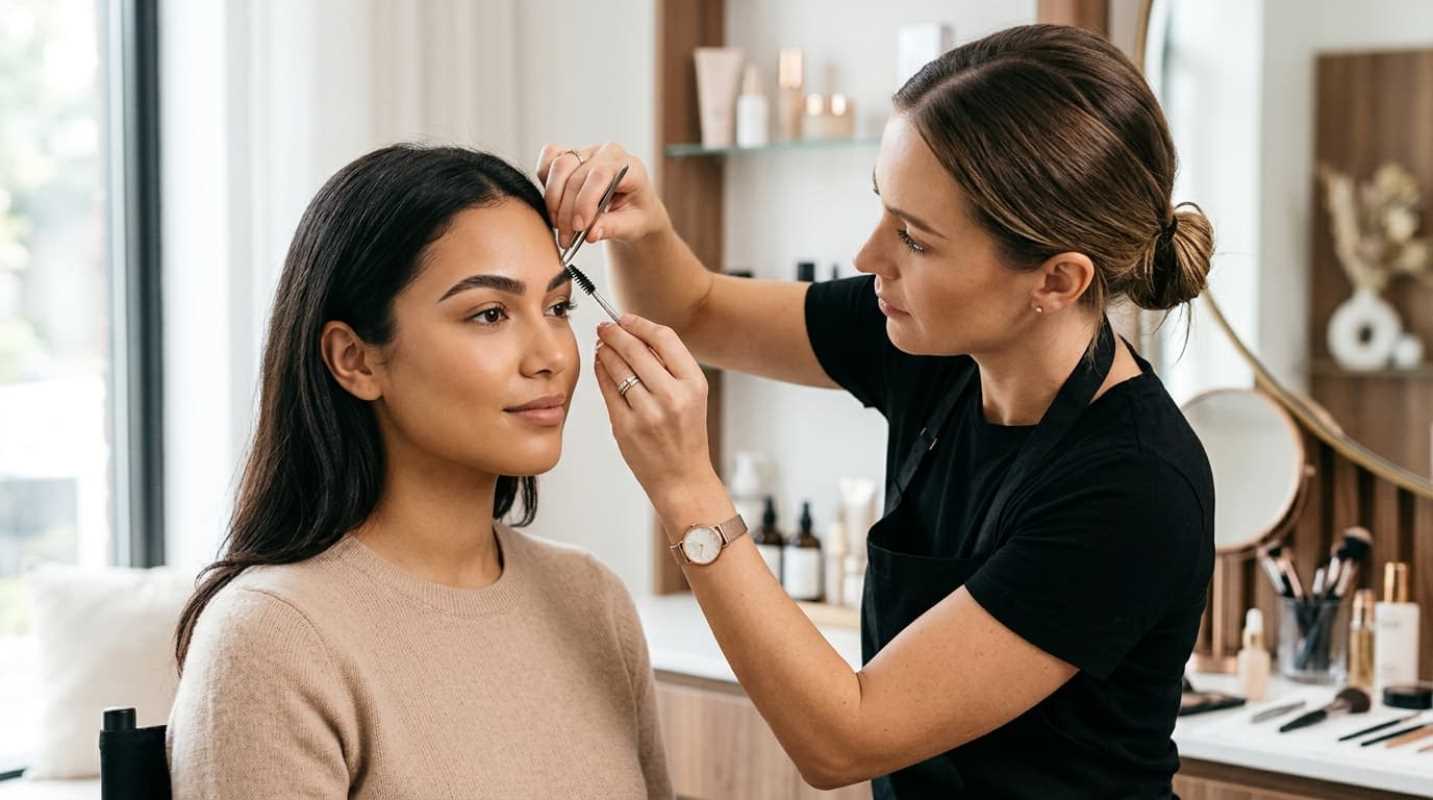
Have you ever spent twenty minutes carefully applying your makeup, only to feel like something still looks off? Nine times out of ten, it comes down to your brows. They frame your eyes, pull your facial structure together, and completely shift how your expressions land.
Beauty routines are undergoing a brow detox. Gone are the days of stiff, rock-hard gels and painted-on, hyper-symmetrical arches. People are moving toward soft, lived-in brows that honor natural hair texture and individual facial architecture. Eyebrow pencils alone command nearly half of the global eyebrow makeup market because so many people want an easy, realistic look.¹
Learning to shape your brows at home does not require an esthetics license. You just need a solid understanding of your face shape and a few reliable tools.
Identifying Your Face Shape
Before you grab a pair of tweezers, you need to understand the frame you are working with. Your bone structure dictates where your arches should naturally rise and fall.
To figure out your face shape, pull your hair back in a tight ponytail and look straight into a mirror.
• Oval: Your face is slightly longer than it is wide, with a softly rounded jawline and forehead.
• Round: The width and length of your face are roughly equal, with soft features and fuller cheeks.
• Square: Your forehead, cheekbones, and jawline share the same width, paired with a sharp jawline.
• Heart: Your forehead and temples are wider, tapering down to a delicate, pointed chin.
• Diamond: Your cheekbones are the widest part of your face, balanced by a narrower forehead and chin.
Once you know your silhouette, apply the classic three-point mapping method to establish your natural proportions.
1. Head (Start): Hold a pencil vertically from the edge of your nostril straight up to the inner corner of your eye. This marks where your brow should begin.
2. Arch (Peak): Hold the pencil from the outer edge of your nostril through the center of your pupil. That spot marks the highest peak of your arch.
3. Tail (End): Angle the pencil from the outer edge of your nostril to the outer corner of your eye. This is where your brow tail should cleanly taper off.
The Blueprint: Matching Brow Shape to Face Shape
Matching your brow shape to your face structure creates instant visual balance. Here is how to tailor your arches for every face type:
• Round Face: Aim for a high, angular arch. A sharp peak draws the eye upward and adds length to a softer, circular face. Avoid flat or overly rounded brows that make your face look wider.
• Square Face: Go for a curved brow with a soft peak. Soft curves help relax a strong, angular jawline. Steer clear of sharp, geometric brow shapes that clash with your jaw.
• Long or Oblong Face: Keep your brows flatter with a low arch, extending the tail horizontally. This breaks up vertical length and broadens the upper face. Avoid steep arches that make your face appear longer.
• Heart Face: Choose a soft, low, rounded arch. Soft curves balance a broad forehead and take the focus off a sharp, narrow chin.
• Diamond Face: Curved arches work best here. Gentle curves reduce the intensity of wide cheekbones and soften sharp facial angles.
• Oval Face: A soft, medium-density brow with a gentle arch preserves your face's natural symmetry. Just avoid high, dramatic arches that disrupt that natural balance.
The Best At-Home Shaping Tools
Having the right tools makes the difference between a clean, fresh brow and an accidental over-plucking disaster. You do not need a full salon setup, but you do need a few high-quality basics.
Here is what belongs in your home brow kit:
• Slant-tip tweezers: Ideal for gripping individual hairs at the root without breaking them or pinching your skin.
• Micro-guard dermaplaner: Great for gently removing fine peach fuzz around your temples and above the brow line.
• Precision curved scissors: Short, sharp blades make it easy to trim long, unruly hairs straight across.
• Dual-ended spoolie brush: Needed for brushing hairs upward before trimming and for blending pencil product.
• Micro-tip brow pencil: A tiny 1.5mm tip lets you fill in sparse gaps with fine, hair-like strokes.
• Flexible clear gel or wax: Keeps hair in place all day without leaving crunchy flakes or white residue.
When choosing a hair removal method at home, stick to tweezing for precision. Waxing and threading work well in professional hands, but they are easy to mess up on yourself. Before you start, always clean your skin with a mild cleanser and sanitize your tweezers with rubbing alcohol to prevent clogged pores.
Avoiding Common Shaping Mistakes
We have all been guilty of taking hair removal a little too far. Have you ever looked in the mirror after tweaking one small hair, only to realize you plucked away half your arch? It happens fast.
To keep your brows full and healthy, keep these simple guidelines in mind:
• Embrace asymmetry: Remember that your brows are sisters, not twins. Forcing complete identical symmetry often leads to over-plucking. Work with your natural hair growth instead.
• Test before you pluck: Use a full-coverage concealer to cover stray hairs first. This lets you preview a thinner shape or shorter tail before pulling a single hair.
• Pluck only from below: Always remove stray hairs from beneath the arch line. Plucking above the brow destroys your natural shape and flattens your arch.
• Step back from the mirror: Avoid magnifying mirrors. They trick you into seeing microscopic stray hairs that nobody else will ever notice. Step back to arm's length regularly to check your overall face balance.
Keeping Your Brows Fresh and Natural
Keeping your brows in top shape does not require daily plucking. In fact, touching them once every two to three weeks is plenty. Over-tweezing damages hair follicles over time, which is why growth serums command over sixty percent of the brow care market today.²
When filling in your brows day-to-day, stick to light, realistic techniques. Use short, flicking strokes with a micro-pencil to mimic real hairs in sparse areas, then brush a flexible wax upward to hold them in place. The straight, boyish arch - often called the fox-eye lift - remains popular because keeping the tail lifted slightly horizontal gives the face a subtle lift.³
Eyebrow shaping comes down to improving what you already have. Honor your natural hair pattern, match your shape to your bone structure, and step away from the tweezers before you overthink it. A quick trim and a light touch of gel are usually all you need to step out the door with confidence.
Sources:
1. Eyebrow Makeup Market Report
https://www.futuremarketinsights.com/reports/eyebrow-makeup-market
2. Eyebrow Growth Products Market
https://www.globalgrowthinsights.com/market-reports/eyebrow-growth-products-market-115377
3. Eyebrow Trends
https://lamisuperbooster.com/blog/eyebrow-trends/