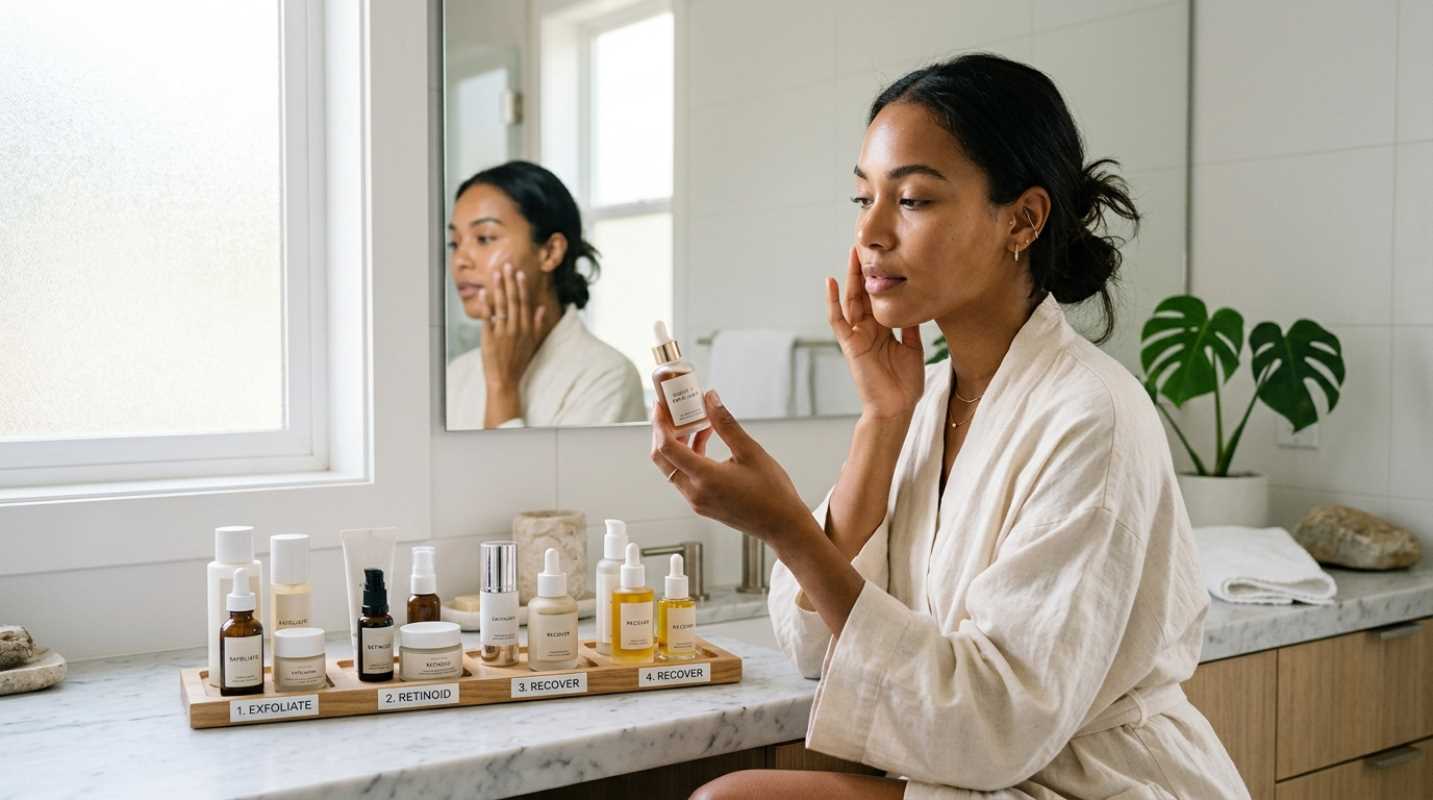
How many skincare products are currently sitting on your bathroom counter? If you are like most beauty enthusiasts, you probably have a collection of acids, retinols, vitamin C serums, and rich creams. For a long time, the dominant message in skincare was that more is always better. We were told to layer active ingredients night after night. But have you ever woken up with a red, stinging face that felt tight and dry? Have you been there?
That painful irritation is your skin crying out for help. When you bombard your face with aggressive ingredients, you strip away its protective barrier. This is why skin cycling has become such a massive movement. What started as a viral social media trend with billions of views has quickly transitioned into a serious topic of clinical discussion.¹
Skin cycling is a strategic, cyclical approach to nighttime skincare. Instead of piling on every product you own, you rotate your active ingredients and give your skin dedicated rest days. But is this just another internet fad, or is there real science backing it up? Let's separate the viral hype from the biological facts.
The Anatomy of the Cycle How It Actually Works
At its core, skin cycling is a simple four-night rotation. It was popularized by New York dermatologist Dr. Whitney Bowe to help people get the benefits of powerful active ingredients without the destructive side effects.
The classic routine looks like this
• Night 1: Exfoliation: You use a chemical exfoliant to clear away dead skin cells and prep your skin.
• Night 2: Retinoid: You apply a vitamin A derivative to boost cellular turnover and collagen.
• Night 3: Recovery: You focus entirely on hydration and skin barrier repair.
• Night 4: Recovery: You give your skin another night of pure hydration before starting over.
Why does this sequence make so much sense? There is a clear physiological reason behind the order. By exfoliating on the first night, you remove the dead skin cells that block your products. This clears the way so your retinoid can penetrate deeper and work more effectively on night two.³
Then, you give your skin a 48-hour rest. Consistency is the secret ingredient for long-term skin health. Your skin does not need to be constantly attacked to look good. By introducing a predictable schedule, you help your skin barrier stay strong while still getting the benefits of your active ingredients.
The Retinol Routine Balancing Efficacy and Irritation
Retinol is the gold standard for anti-aging. It works deep within your skin to speed up cell turnover and stimulate collagen production. But retinol is also notoriously difficult to use. If you apply it every single night, you will likely experience "retinol burn," which leaves your skin flaky, red, and highly sensitive.
This is where skin cycling becomes a game changer. It mitigates this irritation by spacing out your active treatments. Think of it like a workout routine. You would not lift heavy weights every single day without giving your muscles time to rest and rebuild. Your skin operates the same way.
When you start using a retinoid, your skin goes through a transition period. This can trigger a controlled inflammatory response. If you do not give your skin a break, this inflammation spirals out of control, causing the skin barrier to crack and peel.
During the two recovery nights, your skin barrier gets a chance to repair itself. Your skin uses this downtime to synthesize new lipids like ceramides, cholesterol, and fatty acids. This prevents the irritation that usually comes with retinoids, allowing you to use these powerful ingredients without ruining your skin.
What the Skincare Science Says
Dermatologists have widely embraced skin cycling because it champions a "less is more" philosophy. Dr. Rina Weimann, a dermatologist at Schweiger Dermatology Group, points out that while the concept of rotating active ingredients is not entirely new, it is a great reminder that less is often more.² By creating built-in recovery nights, you curb irritation and make sure your products work effectively.
When you use strong acids and retinoids daily without a break, you damage your skin barrier. This can cause your transepidermal water loss, or TEWL, to spike by up to 300 percent. A spike that high means moisture is constantly escaping from your skin, leading to chronic dryness and inflammation.
Over-exfoliation also disrupts your skin's microbiome. This delicate ecosystem of good bacteria thrives at an acidic pH of around 5.0. When you constantly apply harsh acids, you destroy this balance, allowing bad bacteria to move in and cause breakouts.
Dr. Metterle, a dermatologist at Luma Dermatology, notes that giving your skin time to recover helps maintain its natural barrier function and prevents inflammation. Dr. Garekar also emphasizes that a glowing complexion requires a strict balance between regenerating actives and hydrating ingredients. A structured schedule simply makes it easier to stay consistent without hurting your skin.
There is also strong scientific data backing up the tricks used within this routine. Like, clinical research shows that applying a layer of moisturizer before and after a retinoid (known as the sandwich technique) reduces skin irritation by up to 68 percent while keeping the retinoid effective.
Also, a 2024 study published in the Journal of Cosmetic Dermatology evaluated a triple-acid exfoliating blend similar to the ones used on Night 1. The study showed significant clinical success in reducing signs of aging with high tolerability, even in sensitive skin. Spacing out your products works because it respects your skin's biology.
Customizing Your Cycle for 2025
As we look at skincare trends in 2026, the conversation has shifted toward personalization. Although the classic four-night cycle is a great starting template, you should adjust it based on your unique skin type and the current season.
You can customize the cycle using these simple guidelines
• Sensitive or Dry Skin: Extend your recovery phase to three or four nights, or add a recovery night between your exfoliation and retinoid nights.
• Oily or Acne-Prone Skin: You might have a higher tolerance, meaning you can shorten the cycle to a three-night routine with only one recovery night.
• Seasonal Changes: In the cold winter months, swap out strong glycolic acids for gentler polyhydroxy acids, or PHAs, and add an extra recovery night.
Choosing the right active ingredients is also key. For your exfoliation night, look for chemical exfoliants instead of physical scrubs, which can cause micro-tears. On recovery nights, look for barrier-repairing creams packed with ceramides and hyaluronic acid to lock in moisture.
If you are ready to build your own customized skin cycling routine, here are some of our top-rated products to get you started.
Ultimately, skin cycling is not just a passing internet trend. It is a smart, science-backed framework that helps you use powerful ingredients safely. By listening to your skin and giving it the rest it deserves, you can achieve a glowing, healthy complexion without the irritation.
Sources:
1. What is Skin Cycling? How to Start the 4-Night Routine
https://www.isdin.com/us/blog/skincare/what-is-skin-cycling/
2. Skin Cycling: What It Is and How to Do It
https://www.westlakedermatology.com/blog/skin-cycling/
3. Skin Cycling: The Ordinary Guide
https://theordinary.com/en-us/blog/skin-cycling.html
*This article on legitlevel.com is for informational and educational purposes only. Readers are encouraged to consult qualified professionals and verify details with official sources before making decisions. This content does not constitute professional advice.*