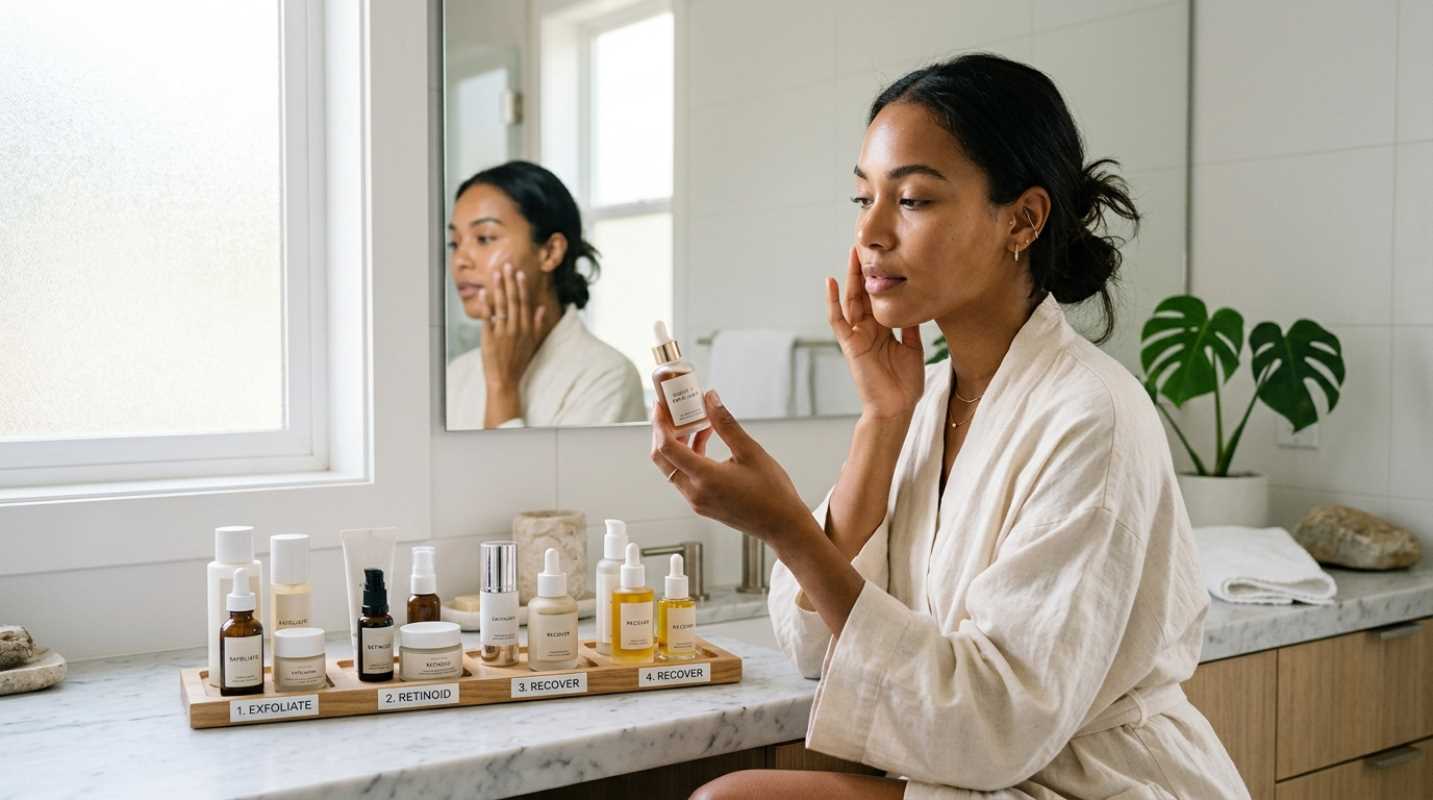
How many times have you bought a viral ten-step skincare routine, only to end up with irritated skin and a lighter wallet? If you answered yes, you are certainly not alone. Many of us have fallen into the trap of thinking that more products equal better skin. But product overload often backfires. In fact, a recent survey revealed that 72% of people unknowingly use products that damage their skin barrier.¹
That is why skin minimalism, often called skinimalism, has become the dominant approach to healthy skin care. Instead of slathering on dozens of strong serums and harsh acids every morning, the goal now is simple care that respects your skin barrier. Real radiance does not come from a magic bottle or a steep price tag. It comes from small, daily habits that you can actually stick with over time.
When you simplify your routine, you give your skin room to breathe and repair itself. Glowing skin is simply a side effect of healthy, well-supported skin.
The Foundation - Hydration and Internal Wellness
Before you open a single jar of moisturizer, your skin care journey starts inside your body. Think of your skin like a household plant. You can mist water on the leaves all day long, but if the soil is bone dry, the plant will eventually wilt. That is exactly how your skin behaves when you skip internal hydration. Drinking enough water throughout the day keeps your skin cells plump and helps your body flush out waste naturally.
Sleep and daily nutrition play just as big a role in how bright your face looks. When you get seven to nine hours of quality sleep each night, your body goes into active repair mode, pumping fresh blood and oxygen to your skin tissues. Couple that with foods rich in healthy fatty acids, like walnuts, seeds, and avocado, and you feed your natural moisture barrier from within.
Can an expensive cream help topically? Sure, but it cannot make up for chronic dehydration and a lack of rest. Skincare products improve what is already happening inside your body, so getting the basics right first is needed.
Mastering the Basics - Cleanse, Protect, and Moisturize
You do not need a complicated shelf of products to see real, lasting improvements. Dermatologists consistently recommend focusing on a basic daily routine that protects your skin during the day and restores it at night.
• Gentle Cleansing: Wash your face with a mild cleanser that cleans without leaving your skin tight or squeaky. In the morning, a quick rinse with cool water is often enough to preserve overnight moisture.
• Barrier-First Moisturizing: Choose non-comedogenic moisturizers containing hydrating ingredients like ceramides, glycerin, or hyaluronic acid. Applying your moisturizer to slightly damp skin locks in surface water much more effectively.
• Daily Sun Protection: Broad-spectrum SPF 30 or higher is non-negotiable every single day. UV exposure breaks down collagen and causes hyperpigmentation, making sunscreen your most powerful anti-aging tool.
For your morning routine, keep things simple with a water rinse, a gentle antioxidant serum, moisturizer, and sunscreen. At night, wash away the day's dirt and pollution, then layer on a nourishing moisturizer to support cellular repair while you sleep.
The Power of Consistency Over Complexity
Switching products every week leaves your skin confused and vulnerable to irritation. Your skin cells take roughly 28 days to turn over completely, which means patience is required before judging if a routine works. You will not see dramatic changes overnight, but you will see a real transformation if you stay steady for a month or two. Physician assistant Sheridan Oliver noted that prioritizing overall skin health naturally leads to better-looking skin.²
How do you make a daily beauty routine stick when life gets busy? The easiest way is habit stacking, which means anchoring your skincare to things you already do without thinking.
• Set Out Products in Plain Sight: Keep your evening moisturizer right next to your toothbrush so you never forget it.
• Pair Sunscreen with Daily Triggers: Place your morning SPF directly beside your car keys or coffee mug.
• Keep It Ultra-Simple: On nights when you are exhausted, commit to just cleansing and moisturizing rather than abandoning your routine entirely.
When your routine feels effortless, keeping up with it every day becomes second nature.
Lifestyle Tweaks for a Radiant Complexion
Beyond topical creams, everyday lifestyle choices have a direct impact on how fresh your skin looks.
• Manage Daily Stress: High stress levels spike cortisol, a hormone that breaks down collagen and triggers sudden breakouts or redness.
• Get Moving Regularly: Exercise increases blood flow, delivering key nutrients and oxygen directly to your face for a natural post-workout flush.
• Wash Pillowcases and Brushes: Dirty pillowcases and old makeup brushes harbor oil, bacteria, and dead skin cells that transfer back onto your face every day.
• Check Ingredients for Common Irritants: Look out for heavy artificial fragrances and drying alcohols that secretly compromise your skin barrier.
Taking care of these small background details prevents unnecessary irritation before it even starts.
Embracing Your Natural Glow
Taking care of your skin should feel like a grounded moment of daily self-care, not an a lot of chore. When you strip away the marketing hype and focus on simple barrier health, your natural tone and texture begin to thrive on their own.
You do not need a vanity packed with dynamic formulas to look and feel radiant in your own skin. Start small today by picking one or two manageable habits, like applying moisturizer on damp skin or wearing SPF every morning. Stay consistent, give your body time, and let your natural glow take center stage.
Sources:
1. Cesqua Skincare Review
https://cesqua.in/blogs/dermats-desk/2025-skincare-in-review-skinimalism-to-barrier-first-what-actually-worked-and-what-to-carry-into-2026
2. Apex Skin Dermatology
https://www.apexskin.com/2025/01/01/new-year-real-skin-simple-skincare-resolutions-that-actually-work/
*This article on legitlevel is for informational and educational purposes only. Readers are encouraged to consult qualified professionals and verify details with official sources before making decisions. This content does not constitute professional advice.*