 (Image source: Gemini)
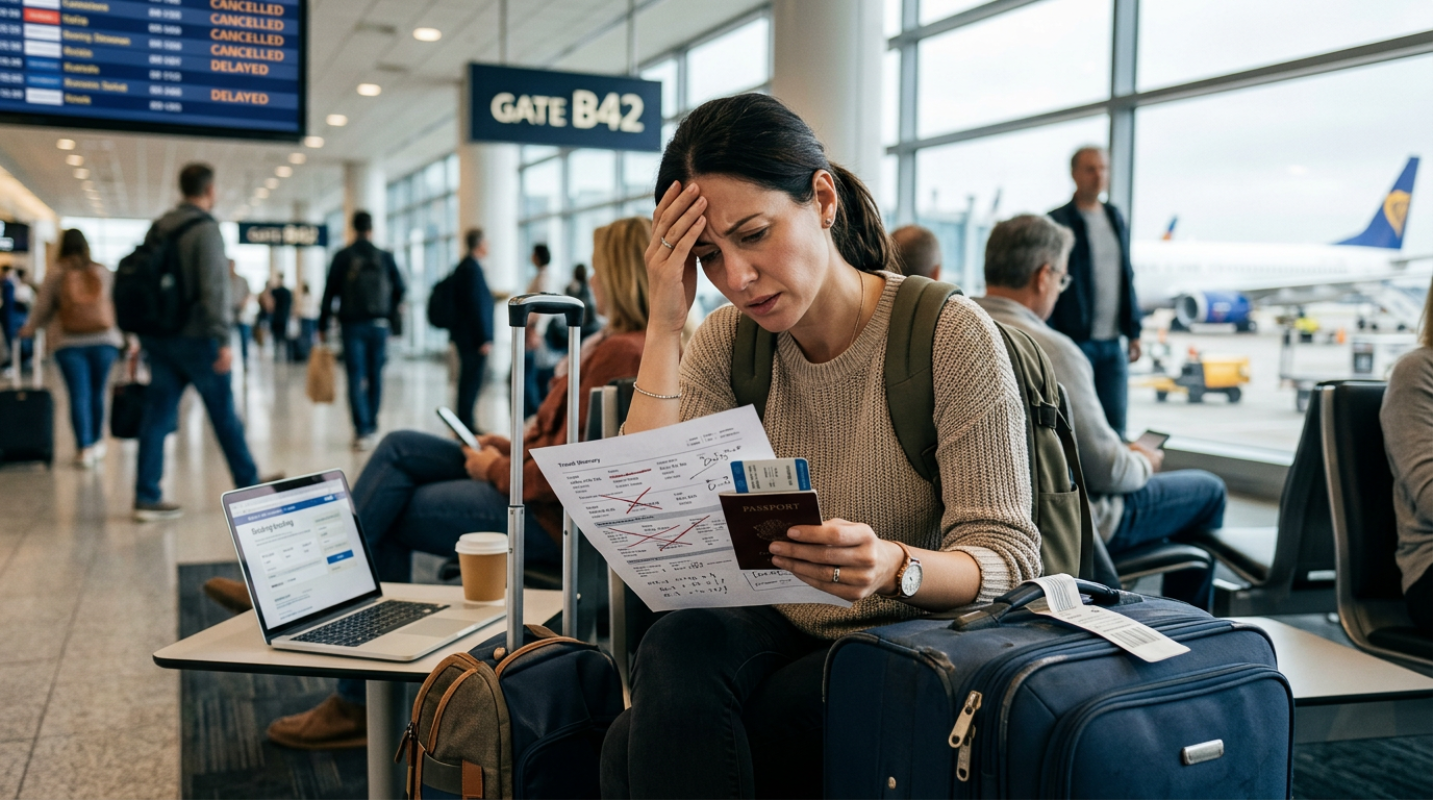
 You tracked your flights, you picked a reasonably priced hotel, and you even skipped the gold-leaf steak. Yet, somehow, you're 30% over budget. It happens to the best of us, especially now that travel has become a complex web of unbundled pricing and digital entry requirements. In today's day and age, "winging it" is no longer a romantic way to see the world. It's a fast track to draining your savings. Between new international entry rules and a global surge in tourist-specific taxes, failing to plan for the small stuff can easily add 20% to 30% to your total bill. It's not just about the money, though. The stress of realizing your passport isn't valid or that you're being charged $12 a day just to use your phone can sour the whole experience.
Think of your travel plan like a house. If the foundation is shaky, the whole thing might come crashing down when a minor storm hits. To help you keep your trip on track, I've put together a guide on the most common traps that travelers are falling into this year and how you can avoid them.
Timing and Platform Traps
We've all heard the myths about the "perfect" time to book. Some say Tuesday at 3:00 AM, while others swear by booking exactly six weeks out. In reality, the best time to book is simply when you see a price you can afford. Waiting for a last-minute miracle rarely works anymore. In fact, price surges are more aggressive than ever, and waiting too long usually just means you'll pay a premium for the leftover seats or rooms.
One of the biggest mistakes you can make is relying solely on third-party booking platforms. Although they're great for comparing prices, they can be a nightmare if something goes wrong. If a flight is canceled or a hotel loses your reservation, the airline or hotel will often tell you to take it up with the platform you used. That's a headache you don't need when you're stuck at an airport. Booking direct often gives you better protection and sometimes even perks like free Wi-Fi or room upgrades.
You also have to be a hawk about the fine print. The FTC Junk Fee Rule that went into effect on May 12, 2025, was a huge win for us. It requires hotels and short-term rentals to show you the mandatory fees upfront. No more getting to the final checkout page and seeing a $200 cleaning fee tacked on. But don't let your guard down. Just because they have to show the fees doesn't mean the fees are low. You still need to check if "optional" add-ons like valet parking or gym access are pre-selected in your cart.
Ignoring the Logistics
Logistics are the least "fun" part of planning, but they're the most likely to ruin your day. Take the six-month passport rule, like. Many people think that as long as their passport is valid on the day they fly, they're good to go. That's a huge mistake. Most of Europe and Asia require your passport to be valid for at least six months from your date of departure. If you show up at the gate with four months left, they won't even let you on the plane. That's a non-refundable vacation gone in an instant.
Then there are the new entry requirements. If you're heading to the UK, you've likely dealt with the Electronic Travel Authorisation (ETA) that launched for everyone last year. It's only £10, but if you forget to do it, you won't get in. Similarly, Europe's biometric Entry/Exit System (EES) has changed the way we move through airports. The days of arriving 20 minutes before boarding are over. If you try that now, you'll likely miss your flight while waiting for your fingerprints to be scanned.
Staying connected is another area where people bleed money. Your home carrier probably offers an international roaming pass for $10 or $12 a day. For a two-week trip, that's over $150 just to check Google Maps. It's the digital equivalent of burning cash.
- Connectivity Solution: Use an eSIM. You can get a local data plan for about $20 for the entire trip. It takes five minutes to set up and saves you roughly 80% compared to roaming.
- Transit Coordination: Avoid tight layovers. With the new biometric checks, a 60-minute connection in Frankfurt or Paris is a gamble you'll probably lose. Give yourself at least two and a half hours.
Budgeting Blind Spots
Your "daily rate" for a hotel is almost never what you actually pay. Since 2025, destinations have been getting much more aggressive with tourist taxes to fight overtourism and climate change. Greece, like, replaced its old stayover tax with a Climate Crisis Resilience Fee on January 1, 2025.¹ Depending on where you stay and the time of year, this can add up to €15 per night to your bill. If you're there for ten days, that's an extra €150 you didn't plan for.
Venice is another prime example. They brought back the "Access Fee" for peak dates in 2025, and it's still in full swing.² If you book your entry at least four days in advance, it costs €5. If you wait until the last minute, it doubles to €10. It’s a small amount, but these "micro-costs" add up across a whole trip. Barcelona has also hiked its taxes, with some 5-star stays reaching €15 per night in combined fees.
Then there's the "Dynamic Currency Conversion" trap at ATMs and card readers. When a machine asks if you want to pay in "Your Home Currency" or the "Local Currency," always choose local. If you choose your home currency, the merchant or the bank gets to set the exchange rate, which usually includes a 5% to 7% hidden markup. It's a total scam.
Avoiding Burnout and Missed Opportunities
I call this the "Disney World effect." You feel like you've spent so much money to get there that you have to see every single museum, monument, and cathedral on the list. You end up over-scheduling yourself to the point of exhaustion. By day three, you're too tired to actually enjoy the things you're seeing, and you're spending a fortune on "convenience" costs like Ubers because you're too wiped out to walk or take the train.
Overpacking is a part of this too. About a third of travelers admit to overpacking, which leads to those dreaded gate-check fees. If you wait until you're at the gate to check a bag that's too big for the overhead bin, you could be looking at a $100 charge. That's more than the cost of a nice dinner.
Instead of a checklist, try to prioritize high-value experiences. Do you really need to go inside every church? Probably not. Leave some white space in your calendar for spontaneity. Some of the best travel memories come from a random cafe you found while wandering, not from a timed entry ticket you bought six months ago.
Planning for Peace of Mind
At the end of the day, travel is supposed to be an escape, not a second job. The goal of all this preparation isn't to turn you into a spreadsheet-obsessed robot. It's to handle the boring stuff now so you don't have to deal with it later. Think of it as the "measure twice, book once" philosophy.
A little bit of strategic preparation goes a long way. Check your passport today. Download an eSIM app before you leave for the airport. Always pay in the local currency. These are small habits, but they're the difference between a trip that feels like a luxury and one that feels like a series of expensive mistakes.
Stay flexible, keep an eye on those hidden fees, and remember that the best part of any trip is the feeling of freedom it gives you. You can't feel free if you're constantly worrying about your bank balance or a missed connection. Plan well, then let go and enjoy the ride.
This article on legitlevel.com is for informational and educational purposes only. Readers are encouraged to consult qualified professionals and verify details with official sources before making decisions. This content does not constitute professional advice.